Building a Proactive Safety Mindset Among Employees
August 13, 2026 · 7 min read
By Sima Surghali, Social Media Manager at QTI
by Hasnaa Al Zidi, HSE trainer at QTI
Every workplace incident has a story that begins long before the moment something goes wrong.
It may start with a skipped safety check, an ignored warning sign, an unfamiliar smell, a damaged piece of equipment, or a seemingly harmless shortcut. Often, the difference between preventing an incident and responding to one comes down to a single factor: mindset.
A proactive safety mindset means employees do not wait for an incident to happen before taking action. Instead, they anticipate potential hazards, identify risks early, speak up when something does not seem right, and understand that workplace safety is everyone’s responsibility.
For organizations looking to improve their HSE performance and safety culture, developing this mindset among employees is essential.
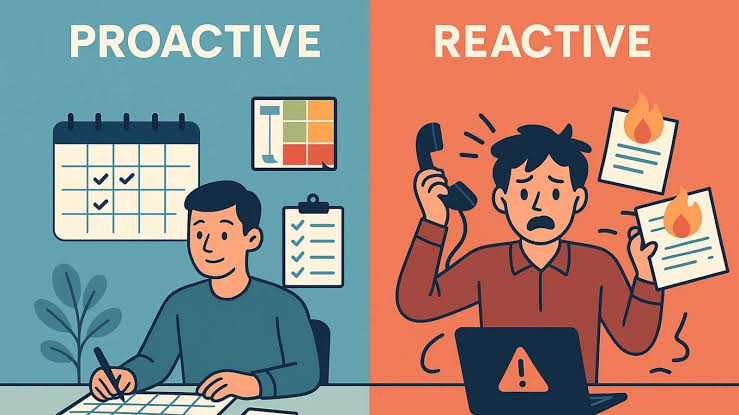
Reactive vs. Proactive Safety: What Is the Difference?
Traditional safety management can often become reactive. An incident occurs, an investigation is conducted, corrective actions are introduced, and procedures are updated.
While incident investigation and corrective action are important elements of any effective safety management system, they happen after an unwanted event has already occurred.
A proactive approach changes the sequence.
Instead of asking:
“What went wrong?”
employees and leaders ask:
“What could go wrong, and what can we do to prevent it?”
A proactive employee may notice a damaged electrical cable before it fails, question an unusual odor before it develops into an emergency, or stop a task when conditions appear unsafe — even when there is no specific procedure covering that exact situation.
This shift from hindsight to foresight is at the heart of proactive workplace safety.
Why Doesn't a Proactive Safety Mindset Happen Automatically?
Creating proactive safety behavior requires more than providing employees with procedures and personal protective equipment.
One of the challenges organizations face is the normalization of risk.
When employees repeatedly perform a task in an unsafe way without experiencing negative consequences, the behavior can gradually begin to appear acceptable or “normal.”
For example, a worker may repeatedly bypass a safety control because “nothing has happened before.” Over time, the unsafe practice becomes routine.
This gradual acceptance of unsafe conditions can weaken safety standards and increase the likelihood of serious incidents.
Organizations can counter this tendency by creating an environment that promotes:
- Hazard awareness
- Continuous safety training
- Employee participation
- Open communication
- Near-miss reporting
- Strong safety leadership
- Recognition of proactive safety behaviors
6 Strategies to Build a Proactive Safety Mindset
1. Make Hazard Awareness a Daily Habit
Hazard identification should not happen only during formal workplace inspections.
Employees should be encouraged to continuously observe their working environment and consider what could potentially cause harm.
Simple tools such as pre-task risk assessments, Take 5 safety checks, toolbox talks, and Job Safety Analysis (JSA) can help turn hazard recognition into a routine part of the workday.
Before starting a task, employees should ask:
What can go wrong?
Who could be affected?
What controls are required?
Making these questions part of everyday work helps develop stronger risk awareness.
2. Empower Employees to Stop Unsafe Work
Employees need to know that they have the authority to pause or stop work when they identify a serious safety concern.
This is particularly important in high-risk environments such as oil and gas, construction, manufacturing, logistics, and industrial operations.
However, stop-work authority only works when employees trust that management will support them.
If workers are criticized for stopping a task or reporting a concern, they are less likely to speak up in the future.
Leadership should therefore make it clear that:
Stopping unsafe work is a responsible safety decision — not a failure to meet productivity targets.
3. Turn Near-Misses into Learning Opportunities
A near-miss is more than an event where “nothing happened.”
It is an opportunity to identify weaknesses before they result in injury, property damage, environmental impact, or operational disruption.
Organizations with strong safety cultures encourage employees to report near misses without fear of blame.
Every properly investigated near-miss can provide valuable information about:
- Unsafe conditions
- Unsafe behaviors
- Weaknesses in procedures
- Inadequate controls
- Training gaps
- Equipment issues
- Organizational factors
The goal should not be to find someone to blame. The goal is to understand why the risk existed and how it can be controlled.
4. Train Employees for Judgment, Not Just Compliance
Procedures and checklists are essential, but real-world situations do not always follow a perfect script.
Effective HSE training should therefore develop employees’ ability to assess unfamiliar situations and make safe decisions.
Scenario-based training can be particularly useful.
For example, employees can be asked:
“What would you do if you noticed a damaged cable immediately before starting the task?”
or:
“What would you do if production pressure increased but the required safety control was not available?”
These discussions help employees develop practical risk assessment and decision-making skills, rather than simply memorizing procedures.
5. Recognize and Reinforce Proactive Safety Behaviors
Employees are more likely to repeat behaviors that are recognized and valued.
When someone identifies a hazard, reports a near-miss, suggests a safety improvement, or stops an unsafe task, the organization should acknowledge the contribution.
Recognition does not always need to involve financial rewards.
A simple acknowledgment during a team meeting, a safety recognition program, or positive feedback from a supervisor can reinforce the message that proactive safety behavior matters.
Recognition should focus on meaningful safety contributions rather than encouraging employees to compete over the number of reports submitted.
6. Lead by Example
Employees closely observe the behavior of supervisors and managers.
If leaders consistently follow safety procedures, take reported concerns seriously, participate in safety activities, and refuse to compromise safety for convenience, employees receive a clear message about organizational priorities.
On the other hand, if managers routinely skip safety checks or pressure employees to continue unsafe work to meet deadlines, employees will quickly recognize the difference between written policies and actual priorities.
Leadership behavior is one of the strongest influences on workplace safety culture.
The Role of Risk Assessment in Proactive Safety
A proactive safety mindset is closely connected to effective risk assessment.
Risk assessment helps organizations identify hazards, evaluate the likelihood and severity of potential harm, and determine appropriate controls before an incident occurs.
A proactive approach should consider not only existing hazards but also:
- Changes in equipment or processes
- New employees or contractors
- Non-routine activities
- Maintenance work
- Emergency situations
- Changes in the work environment
- Lessons learned from incidents and near misses
Organizations should also apply the Hierarchy of Controls when selecting risk-control measures, prioritizing more effective controls rather than relying primarily on administrative procedures or personal protective equipment.
The Long-Term Benefits of a Proactive Safety Mindset
Organizations that successfully develop proactive safety behaviors can achieve benefits that extend beyond reducing incident rates.
Employees become active participants in hazard identification and risk management rather than simply following instructions.
This can contribute to:
- Fewer workplace incidents
- Earlier identification of hazards
- Improved employee engagement
- Better communication
- Stronger trust between employees and management
- Reduced operational disruptions
- Improved safety performance
- A stronger organizational safety culture
Most importantly, employees begin to understand that safety is not something that belongs exclusively to the HSE department.
It belongs to everyone.
From Compliance to Safety Ownership
A proactive safety mindset cannot be created through a single training course, safety campaign, or policy update.
It develops through consistent leadership, continuous learning, employee involvement, open communication, and daily safety habits.
The ultimate goal is to move beyond simple compliance.
Compliance asks:
“Are we following the procedure?”
Safety ownership asks:
“Is this task safe, and what can I do to make it safer?”
That difference is significant.
When employees are empowered to notice, question, report, and act before harm occurs, safety becomes more than a set of rules imposed by management. It becomes part of how people think and work every day.
Conclusion
Building a proactive safety mindset is one of the most effective ways organizations can strengthen their workplace safety culture and improve overall HSE performance.
It requires more than rules and procedures. Organizations must create an environment where employees feel responsible for identifying risks, confident enough to speak up, and empowered to take action when something is unsafe.
The strongest safety cultures are built when every employee understands one simple principle:
Safety is not only about responding when something goes wrong. It is about recognizing what could go wrong — and acting before it does.