Common Risk Assessment Mistakes That Increase Workplace Accidents
July 20, 2026 · 4 min read
By Sima Surghali, Social Media Manager at QTI
By Unnikrishnan Arryattu, HSE Trainer at QTI
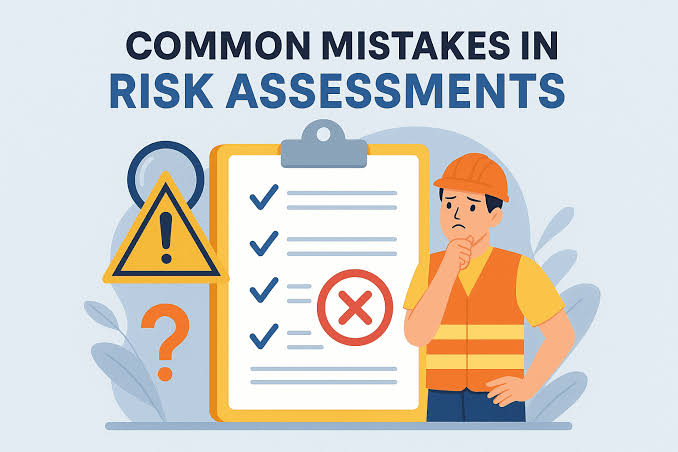
A workplace risk assessment is one of the most effective tools for preventing accidents, protecting employees, and ensuring business continuity. However, many organizations treat risk assessments as little more than a compliance requirement, missing valuable opportunities to identify hazards and implement meaningful risk controls.
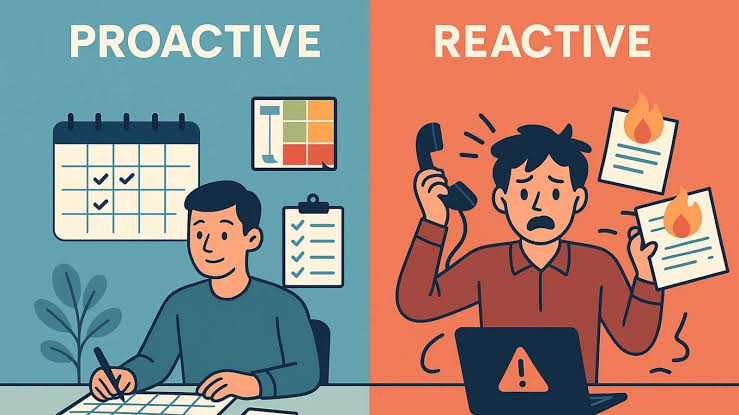
An effective risk assessment is not simply a document prepared for auditors. It is a living process that reflects real workplace conditions and supports safer day-to-day operations.
Below are some of the most common risk assessment mistakes—and how organizations can avoid them.
1. Treating Risk Assessment as a Paperwork Exercise
One of the biggest mistakes organizations make is preparing risk assessments solely to satisfy regulatory or client requirements.
In many cases, assessments are completed in an office without visiting the worksite or consulting employees who perform the tasks.
Why This Is a Problem
When risk assessments are disconnected from actual operations:
- Workplace hazards remain unidentified.
- Employees are unaware of the required control measures.
- Safety procedures are not implemented consistently.
- The assessment becomes a document stored in a file instead of a practical safety tool.
A risk assessment only creates value when it is actively communicated, implemented, and reviewed.
2. Using Generic or Copy-and-Paste Templates
Every workplace is different.
Yet many organizations rely on standard templates without adapting them to their own equipment, processes, facilities, or environmental conditions.
Examples of site-specific hazards include:
- Blind spots around mobile equipment
- Poor lighting in work areas
- Restricted access routes
- Environmental conditions
- Specialized maintenance activities
Generic assessments often overlook these hazards, creating a false sense of security while significant risks remain uncontrolled.
3. Excluding Frontline Workers
Risk assessments should never be developed solely by managers or supervisors.
Employees performing the work every day possess practical knowledge that cannot be found in procedures alone.
Frontline workers can identify:
- Unsafe work practices
- Equipment deficiencies
- Near misses
- Production pressures
- Temporary workarounds
Their involvement significantly improves the quality and accuracy of workplace risk assessments.
4. Relying Too Heavily on Personal Protective Equipment (PPE)
Many organizations immediately recommend PPE whenever a hazard is identified.
While PPE is essential, it should never be the first control measure considered.
Effective risk assessments should follow the Hierarchy of Controls:
- Elimination
- Substitution
- Engineering Controls
- Administrative Controls
- Personal Protective Equipment (PPE)
PPE provides the last line of defense. Eliminating or reducing hazards at the source is always more effective than relying solely on employee behavior.
5. Ignoring Occupational Health Hazards
Many assessments focus primarily on hazards that cause immediate injuries while overlooking long-term occupational health risks.
Commonly overlooked hazards include:
- Dust exposure
- Chemical vapors
- Excessive noise
- Heat stress
- Ergonomic risks
- Repetitive motion injuries
- Worker fatigue
- Mental stress
Although these hazards may not cause immediate accidents, they contribute to chronic illnesses, absenteeism, reduced productivity, and significant long-term business costs.
A comprehensive risk assessment should address both safety risks and occupational health hazards.
6. Failing to Update Risk Assessments
Risk assessments should evolve as workplaces change.
Unfortunately, many organizations treat them as one-time documents.
Risk assessments should always be reviewed after:
- Installing new machinery
- Process changes
- New materials or chemicals
- Automation upgrades
- Hiring new employees or contractors
- Workplace redesign
- Incidents or near misses
Regular reviews ensure that control measures remain effective and new hazards are identified before accidents occur.
How to Improve Risk Assessment Quality
An effective risk assessment should provide clear, measurable, and practical instructions.
Instead of writing:
"Use caution when working at height."
Provide specific guidance such as:
"Employees working on Platform B shall wear a full-body safety harness attached to the certified overhead lifeline. The supervisor must verify the anchor point and complete the daily inspection checklist before work begins."
Clear instructions reduce ambiguity, improve compliance, and strengthen workplace safety performance.
Conclusion
A risk assessment should never be viewed as a paperwork exercise completed solely for compliance.
Its purpose is to identify hazards, evaluate risks, and implement effective control measures that protect employees, equipment, and business operations.
Organizations that involve frontline workers, apply the Hierarchy of Controls, address occupational health hazards, and regularly review their assessments create a proactive safety culture that prevents incidents before they occur.
Ultimately, a well-executed risk assessment is not simply a regulatory requirement—it is a strategic investment that improves operational performance, reduces workplace accidents, and protects the long-term success of the organization.